How ethical thought experiments make a good future thinkable.
What should we think about the future? Fear is a poor advisor, and forecasts founder on the complexity of reality. Thought experiments are different. They play with what is thinkable. Only the thinkable can be shaped. Thought experiments turn fear into understanding. That's how spaces for innovation open up. But innovation only asks about feasibility: What can I do? Ethics asks: What should I do? Whoever has many options can choose one that is good — for the family, the company, society. That's Futurethik — good innovation with method: understanding - innovation - ethics.
The thought experiments revolve around questions like why Captain Jean-Luc Picard of the Enterprise doesn't carry a wallet, what Winnetou can teach us about digital leadership, and whether Ötzi would still have been murdered despite a distributed ledger. They ask why there should still be companies and employees, and why aging with dignity is unthinkable without care robots. And they explain why extinction has never been as pleasant for humanity as it is today.

Thought experiments turn fear into understanding — and understanding into a joy in the future.
Ethics becomes possible the moment we stop thinking there is no alternative.
It is the essence of the future that it is unpredictable — otherwise it would merely be a continuation of the past.
Prosperity endures only if we relentlessly destroy the good with the better.
Agile ethics should not lecture but think along. Not everything that is feasible is good from the outset. But only know-it-alls can know that in advance. Ethics is not a forecast but a daily practice of attentiveness.
Through vivid metaphors and examples, your guests grasp what technology can do — and where its limits lie.
Your guests get a method for taking open-ended developments apart, instead of just waiting them out.
Every thought experiment ends at the point where a decision to be made today becomes visible.
A vision of the future that gives courage without promising something nobody can deliver.

A trained computer scientist and rocket scientist, he is a business angel, author — and a cyborg.
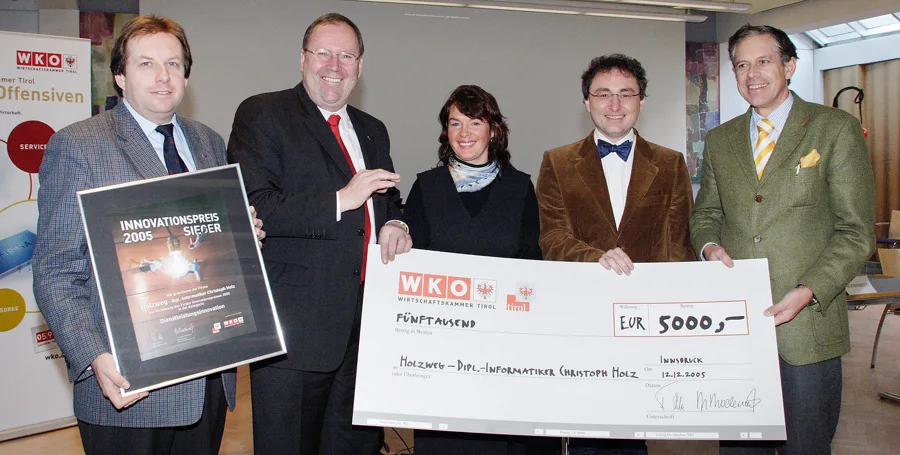
Innovation Award of the Province of Tyrol 2005, finalist for the Austrian State Prize for Innovation 2007, and finalist for the State Prize for Digital Solutions 2017.
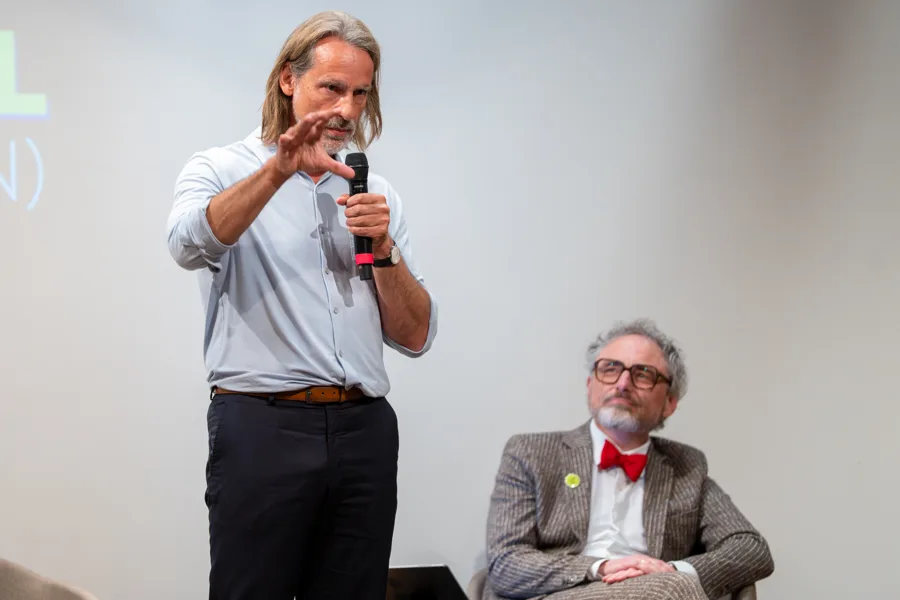
Holz teaches Digital Ethics at the FH Upper Austria in Steyr; the method behind this talk has been tested in the lecture hall.
Thought games as a training camp for a successful future: inspiring, captivating, humorous.

Yes: the thought experiments are tailored in advance with the organizer to the industry and audience; the structure stays, the cases change.
Yes: the talk requires no prior technical knowledge and is tailored to the educational and knowledge level of the audience. Usually Holz joins in beforehand to get to know his listeners.
Yes: every thought experiment is an invitation to join in — heckling and votes explicitly welcome.
Yes — and specifically courage: once you've thought a development through to the end, you lose your fear of it. Christoph Holz is deliberately optimistic — the future as a space to shape, not as a threat.
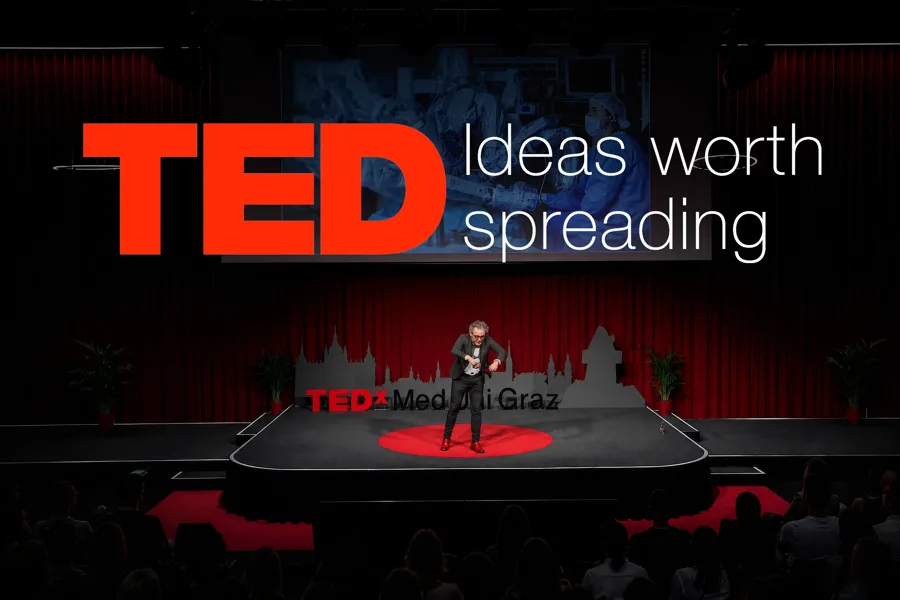
As a keynote speaker, Christoph Holz is ranked among the Top 10 by Manager Magazin. Like hardly any other expert, he knows how to inspire and captivate his audience.