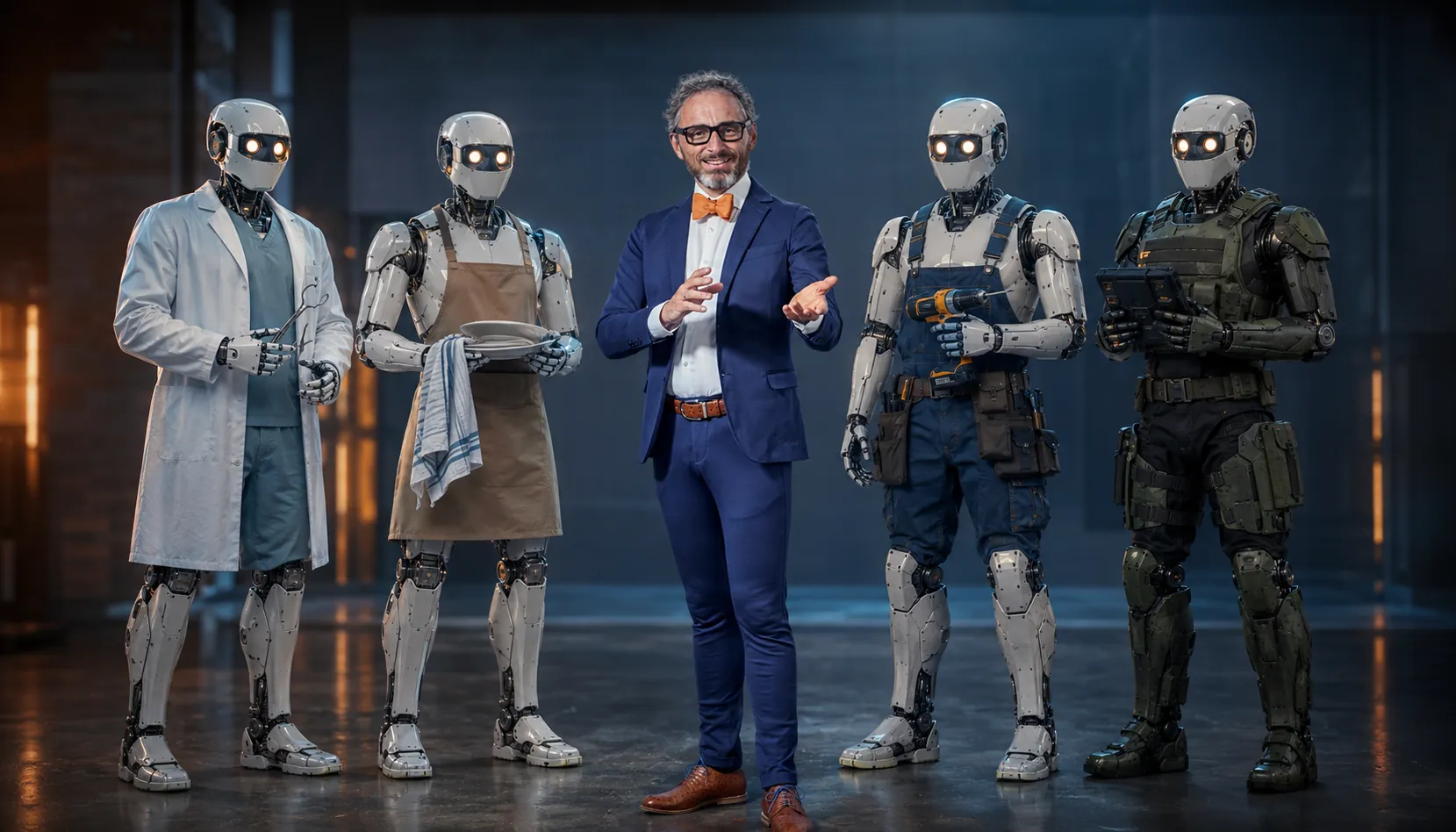
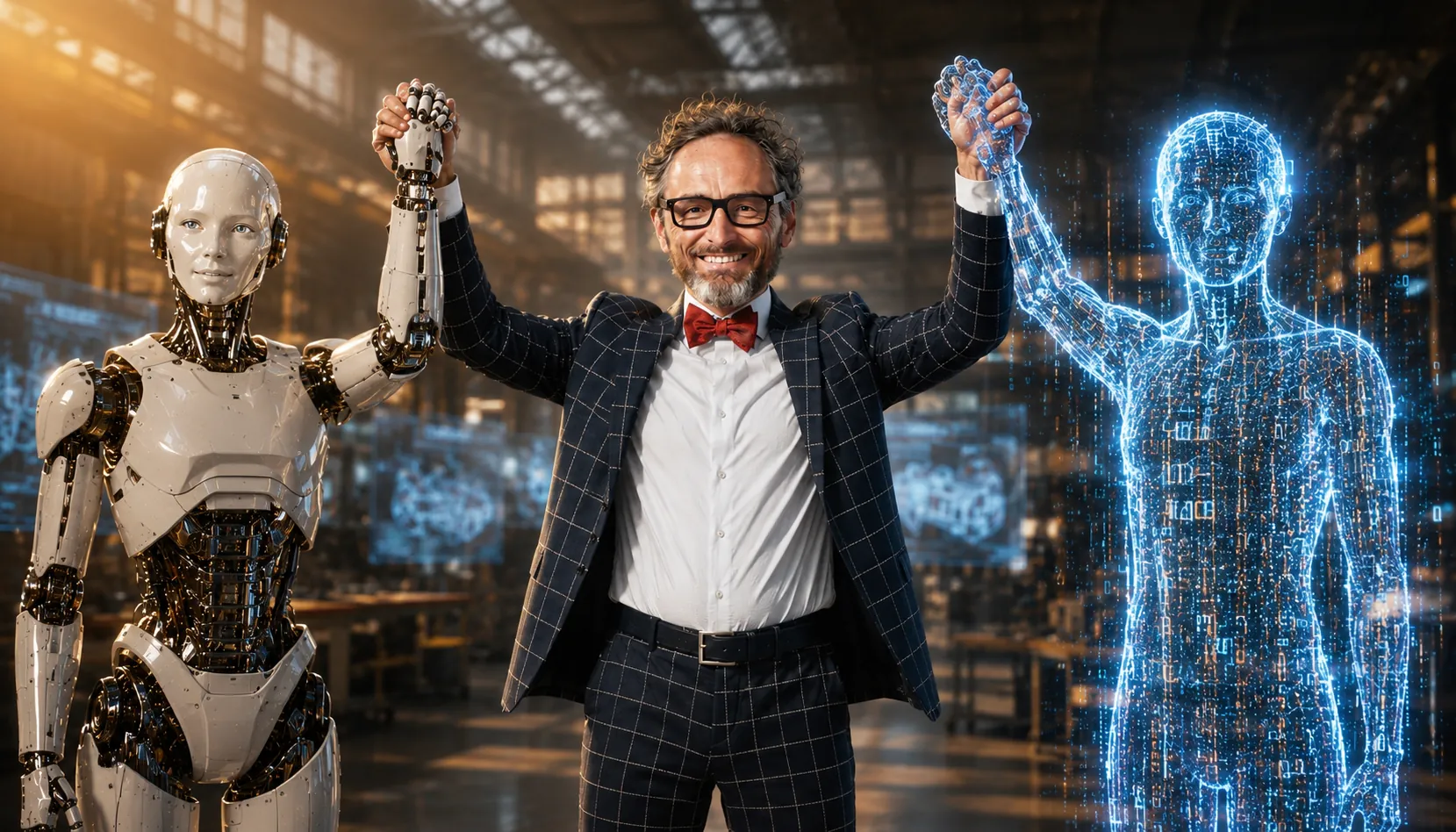
The robots are finally coming — to the trades, the household, medicine and much more.
For forty years the robot stood in its cage, bolted to the factory floor — blind and deaf. Now it's getting eyes, legs and perception — and becoming the first machine without a fixed purpose. Freed from the cage, it conquers one new domain after another: medicine, the household, the trades.
Why does a robotic hand need five fingers when three would do just fine?
Why do we lock industrial robots in cages? So they can't break out?
For decades we feared the robots would take our jobs. Demographics reverse the sentence: we are running out of people—and the machines are arriving just in time.
Through vivid metaphors and examples, your guests grasp what technology can do — and where its limits lie.
They understand how the robot travels from the factory through the workshop and into the home.
They tell science fiction apart from what humanoids can really do.
They grasp what the purposeless universal machine means for value creation and competitive standing.

Voices from hosts and audiences.
Over the past weeks and months, we've worked with Christoph in a wide variety of formats (live, digital, hybrid). The talks themselves are maximally inspiring; beyond that, we got to know a highly professional, dedicated and in every respect fascinating person. It's a great privilege for anyone to be able to work with Christoph. We'll meet again, and we're really looking forward to it.
★★★★★CRChristoph R.
★★★★★Many thanks for the spontaneous and professional support. Christoph Holz was extremely flexible and accompanied the entire event wonderfully. It was a pleasure to follow him and to have further inspiring conversations as well. Thank you very much.
BB.
★★★★★You were clearly the highlight of the event at the Brucknerhaus Linz. Congratulations!
AGAlfred Gunsch
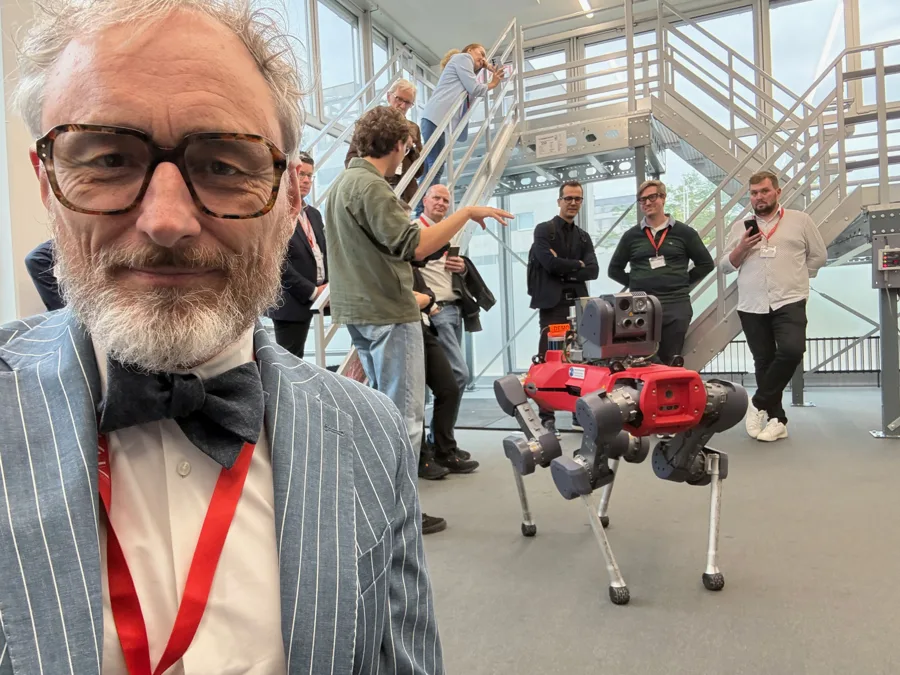
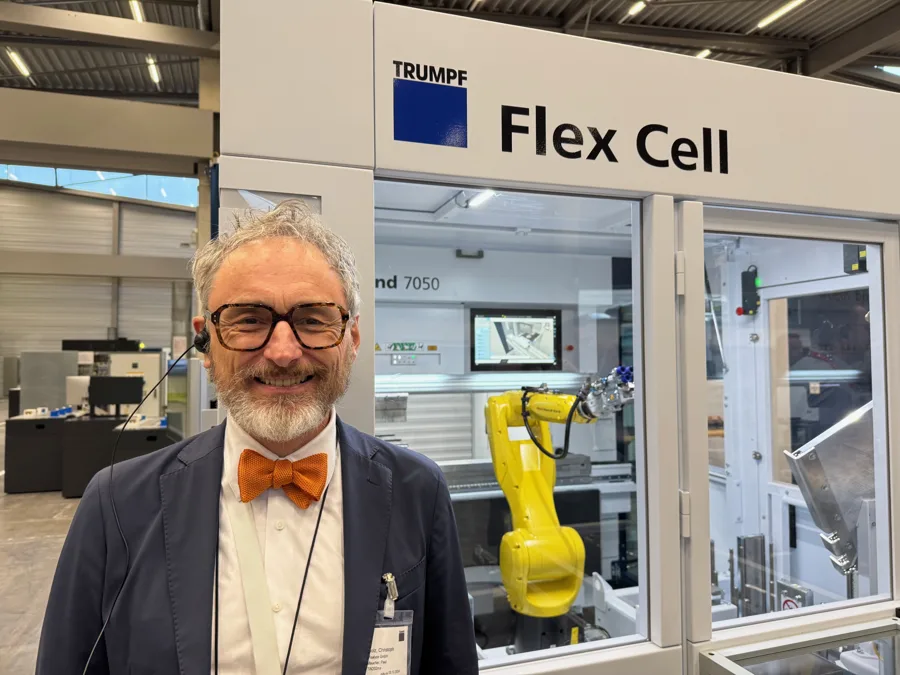
Ever since he built his first industrial articulated robot in 1986, robotics has never let go of Christoph Holz: in 2014 he saw the welding robots at Tesla in Fremont, in 2026 their evolution at Magna Steyr on the G-Class assembly line. At ABB he explored cobots, at ANYbotics four-legged inspection robots and at Mimic the training of humanoid robots. On stage, he answers the question of why robots are leaving their cages — and why an industrial robot needs hands with five fingers when three would do.
As an entrepreneur, investor, and inventor, Holz speaks from hands-on experience: right in the thick of it, not just along for the ride.
Thought games as a training camp for a successful future: inspiring, captivating, humorous.

Yes: examples and key topics are tailored to the industry in advance with the organizer — here, for instance, to manufacturing, the skills shortage, and humanoid robots.
Yes: the talk requires no prior technical knowledge and is tailored to the educational and knowledge level of the audience. Usually Holz joins in beforehand to get to know his listeners.
Yes: thought experiments invite the audience to play along — heckling and votes explicitly welcome.
Yes — and that something is courage: vivid stories like the one-armed bandit in bright orange fuel conversations that last well beyond the evening. Christoph Holz is deliberately optimistic — technology as a tool that strengthens the trade.
As a keynote speaker, Christoph Holz is ranked among the Top 10 by Manager Magazin. Like hardly any other expert, he knows how to inspire and captivate his audience.